
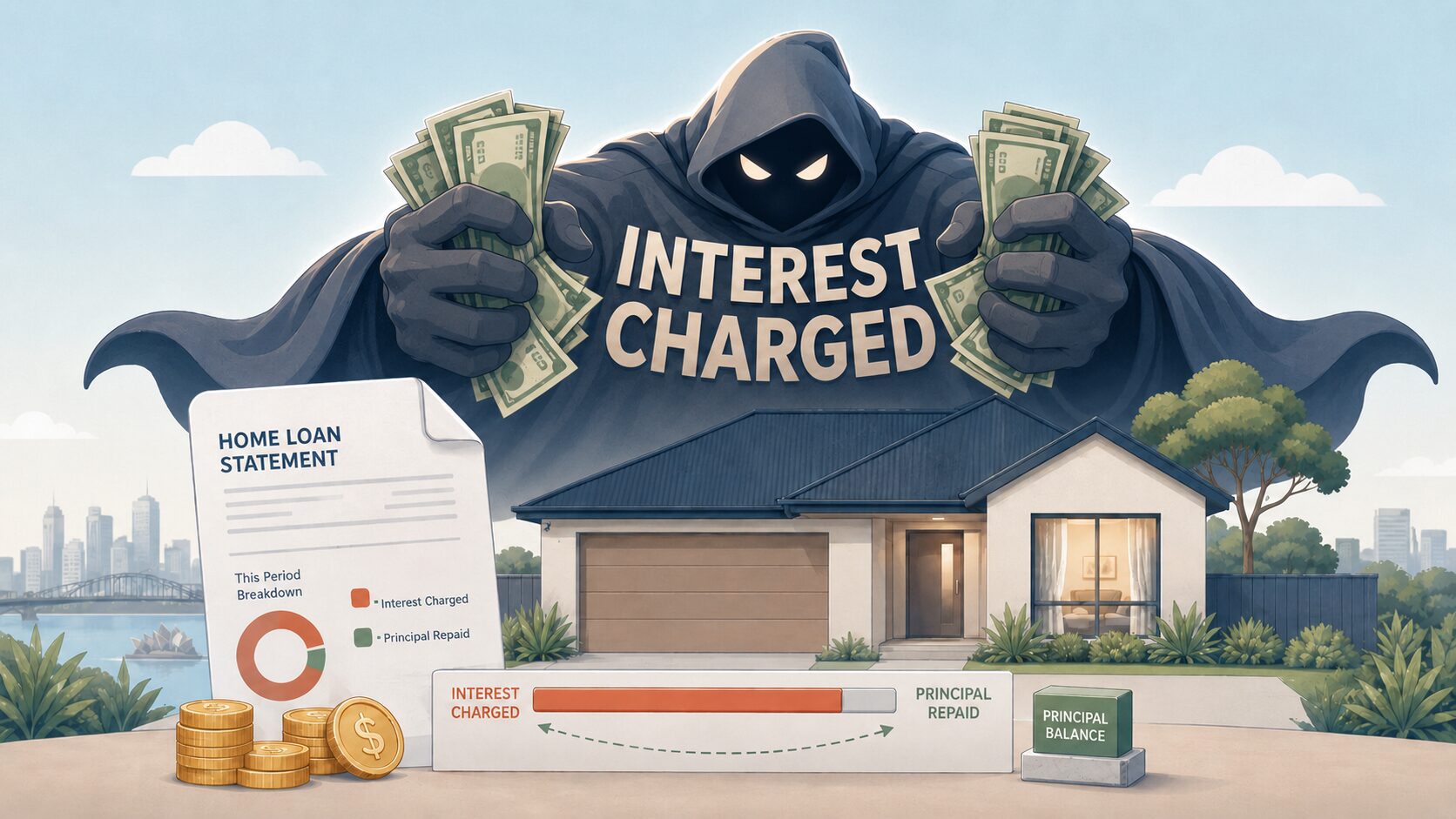
Let’s be real for a second – looking at your mortgage statement can feel a bit like watching a horror movie where the villain is a giant, soul-crushing number labelled “Interest Charged.” You pay and you pay, but that principal balance barely nudges. It’s enough to make anyone want to hide under the covers with a tub of chocolate icecream and have a good cry.
But what if I told you there was a way to make part of your debt literally “invisible” to the bank?
No, it’s not magic (though it feels like it). It’s called an Offset Account.
At More Than Mortgages, we see people’s eyes light up when they finally “get” how these work. It’s the ultimate home loan life hack, but like any good hack, there’s a right way and a wrong way to use it.
So, grab a cuppa, get comfy, and let’s break down the what, the who, and the “should I actually do this?” of offset accounts.
What is an Offset Account Anyway
In plain English (because we don’t do jargon here), an offset account is a regular transaction account, the kind you use for your groceries, Netflix subscription, and late-night Kmart runs, that is “besties” with your home loan.
The magic happens in the background. Every dollar you have sitting in that account is “offset” against your loan balance when the bank calculates how much interest to charge you.
The Golden Rule: The bank only charges you interest on the difference between your loan balance and your offset balance.
Imagine you have a $500,000 mortgage. If you have $50,000 sitting in your linked offset account, the bank looks at your situation and says, “Cool, we’ll only charge them interest on $450,000 today.”
You still make your regular repayments, but because you’re being charged less interest, more of that repayment goes toward actually paying off the house rather than lining the bank’s pockets.

The Daily Grind
Here is a fun fact that most people miss: Banks calculate interest daily.
This is huge. It means that even if you only have $10,000 in your offset account for three days before you pay your credit card bill, you’ve saved three days’ worth of interest. It’s like a tiny, invisible win every single day.
This is why we often suggest having your entire salary paid directly into your offset. Even if that money eventually leaves to pay for electricity or avocado toast, while it’s sitting there, it’s working for you.
Who is the Ideal Offsetter
Not every tool fits every shed. An offset account is a high-performance feature, which means it’s perfect for some people and a bit of a waste for others.
1. The Super Savers
If you’re the type of person who keeps a decent “emergency fund” or is actively saving for a big renovation/holiday/wedding, an offset is your best friend. Instead of earning a measly 4% interest in a savings account (and then paying tax on that interest, thanks, ATO!), you’re effectively “earning” the same rate as your mortgage (let’s say 6%) by saving it. And since saved interest isn’t “income,” it’s tax-free. Winning.
2. The “Salary Parkers”
If you’re disciplined enough to have your pay land in the account and stay there as long as possible, you’re the prime candidate. You’re using the bank’s own math against them.
3. The Future Investors
This is a big one. If you think you might one day turn your current home into an investment property, an offset account is essential. Why? Because if you put extra money directly into the loan (redraw), you can’t easily “take it back” later for tax purposes if the house becomes a rental. With an offset, the loan balance stays high, which is usually better for your tax deductions later on. (Of course, chat with your accountant about this, we’re brokers, not tax wizards!).

Who Should Maybe Skip the Offset
We’re all about honesty here at More Than Mortgages. We aren’t going to set you up with a feature you won’t use.
1. The “Zero-Balance” Crew
If your bank account balance looks like a countdown to $0 every fortnight, an offset account might actually cost you money. Most loans with offset features come with an annual “package fee” (usually around $395) or a slightly higher interest rate than a “Basic” no-frills loan.
If you only ever have $200 in your account, the interest you save won’t cover the fee you’re paying to have the feature. It’s like paying for a gym membership and only going once to use the water fountain.
2. The Temptation Seekers
If having $20,000 sitting in your “transaction” account makes you want to buy a jet ski you don’t need, then an offset might be a dangerous game. For some, putting extra cash directly into the loan (where it’s harder to see and touch) is a better psychological strategy.
Offset vs Redraw
“But Simone,” I hear you ask (or maybe you’re chatting with Tristina), “can’t I just put my extra money into the loan and redraw it later?”
Great question! Yes, you can. A Redraw Facility lets you make extra payments and then pull them back out if you need them.
The main differences are:
- Accessibility: Offset funds are instant. It’s your money in a bank account. Redraw can sometimes have a delay, a minimum “pull out” amount, or (rarely) a small fee.
- Tax: As mentioned above, for future investors, Offset is king. Redraw can get messy with the tax man if you start using the house as a rental.
- Separation: Many people find it easier to keep their “spending/savings” money separate from their “mortgage” money.
The Basic Loan Trap
Sometimes, you’ll see a home loan with a rock-bottom interest rate that looks too good to be true. Usually, these are “Basic” or “No-Frills” loans. They are great if you just want the lowest rate possible, but they almost never include a 100% offset account.
Before you sign on the dotted line, you need to weigh up:
- Basic Loan: Low rate, no offset, few features.
- Pro/Package Loan: Slightly higher rate (sometimes), annual fee, and full offset account.
This is exactly where we come in. We don’t just find you a rate; we do the math to see if your typical bank balance justifies the cost of an offset. You can even use our Borrowing Power Calculator to start seeing what your numbers look like.
 Pro Tip The Bucket Method
 Pro Tip The Bucket Method
Did you know some lenders allow you to have multiple offset accounts? This is a game-changer for the budgeters out there.
You can have an account for “Bills,” one for “Emergency Fund,” and one for “Holiday Savings.” As long as they are all linked to your home loan, all of that money is working together to crush your interest. It’s like having an army of tiny financial soldiers all fighting the same battle.
Is it Worth it for You
At the end of the day, an offset account is a tool. In the right hands, it can shave years: and we mean years: off your mortgage and save you six figures in interest over the life of the loan.
But if you’re more of a “no-frills” person who just wants the absolute lowest repayment and doesn’t plan on keeping much cash in the bank, a basic loan might be your winner.
Don’t guess. Let us do the heavy lifting. We’ll look at your spending habits, your savings goals, and your “jet ski temptation levels” to find the right fit.
If you’re ready to see if you could be saving more, why not Book an Appointment with us? We can have a chat (virtual or in-person) and figure out your next move.

The TLDR Summary
- Offset = A bank account that reduces your loan interest.
- Best for: Savers, people who get paid into their accounts, and future investors.
- Worst for: People with low cash balances or those who find fees annoying.
- Tax perk: Saved interest isn’t taxed; earned interest is.
- The MTM approach: We’ll calculate the fee vs. the saving to make sure you’re actually winning.
Some things in life are hard, but your mortgage doesn’t have to be. Let’s get that interest balance down and your “living your best life” balance up!