
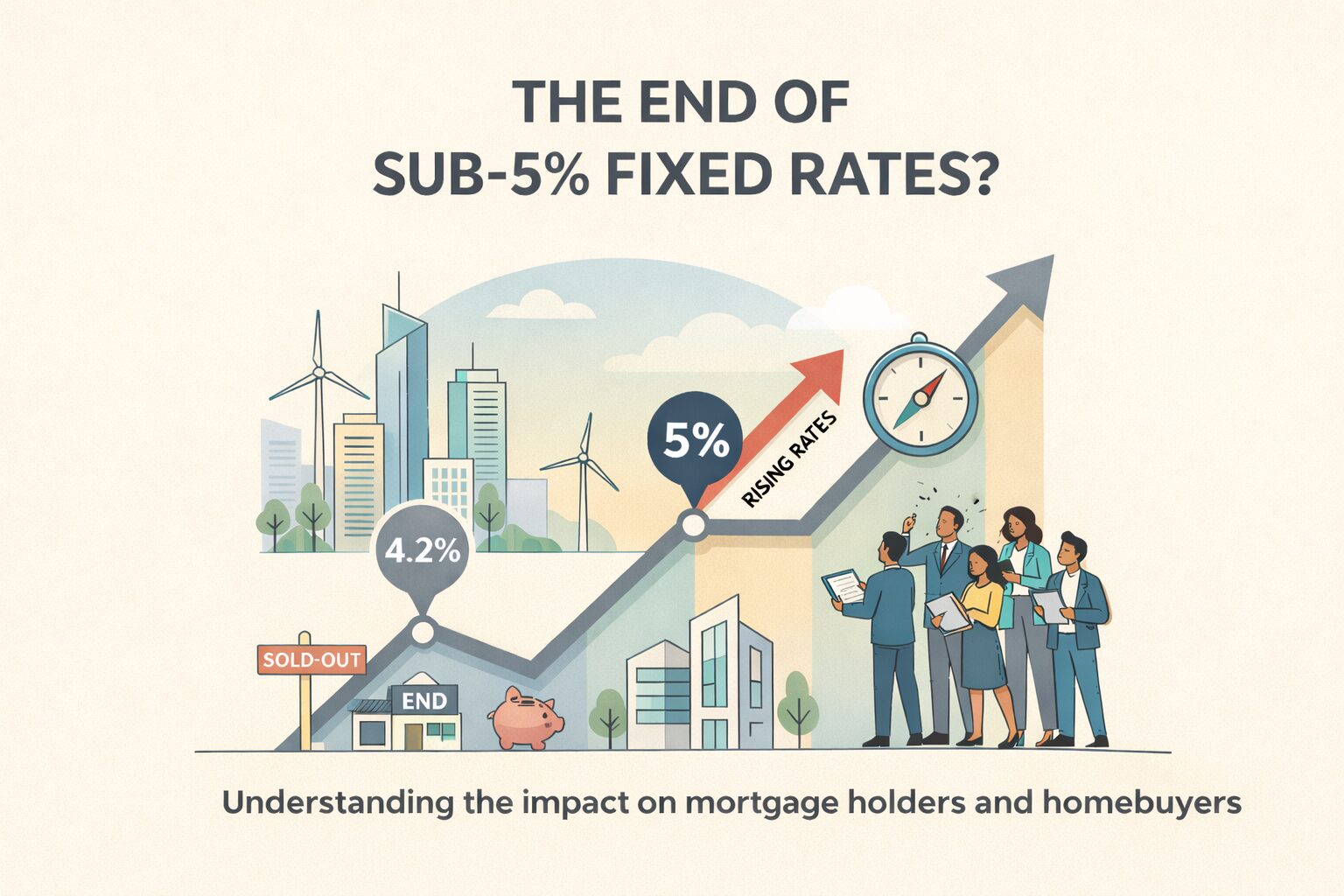
Remember back in early 2024 when we all looked at a 5.5% rate and thought, “Ouch, that’s a bit steep”? Fast forward to April 2026, and those sub-5% fixed rates have officially joined the ranks of low-rise jeans and Nokia 3310s, they’re relics of the past.
If you’ve been scrolling through bank sites lately or catching the news over breakfast, you’ve probably noticed the shift. Fixed home loan rates have been doing some serious heavy lifting in the wrong direction.
It’s a bit of a shock to the system, isn’t it? Especially when you’re trying to figure out if now is the time to lock things in or just ride the variable wave. But here at More Than Mortgages, we’re all about cutting through the noise. Adulting with a mortgage is stressful enough, so let’s break down what’s actually happening, and more importantly, what you can do about it.
Why did the sub-5% rates pack their bags?
You might be thinking, “Wait, the RBA only just moved the cash rate in March, why did my bank hike their fixed rates weeks before that?”
It feels a bit like the banks have a crystal ball, right? Well, they kind of do. It’s called the bond market.
Unlike variable rates, which tend to follow the RBA’s lead like a loyal Labrador, fixed rates are more like a cat: they do their own thing based on where they think the world is headed. Banks look at “bond yields,” which is basically a fancy way of saying “what investors think interest rates will look like in two, three, or five years.”

Lately, bond yields have been trending upward. The market (those smart folks in suits) is betting that interest rates are going to stay elevated for a lot longer than we initially hoped. Because it costs banks more to source the money they lend you for a fixed period, they pass those costs on.
Essentially, fixed rates aren’t set based on where rates are today. They’re set based on where the big banks think rates are going tomorrow. And right now, the vibe is “higher for longer.” You can read more about the recent RBA rate changes here to see how we got to this point.
What’s happening with different loan terms?
Not all fixed rates are created equal. Depending on whether you’re looking at a short-term fix or a long-term commitment, the landscape looks a bit different.
1. The Short-Term Fix (1–2 Years)
This is where we’ve seen the most movement lately. Shorter-term rates have repriced quite aggressively. Why? Because these rates track near-term expectations. Since the March rate rise was largely anticipated, lenders moved quickly to ensure they weren’t caught out. If you’re looking for a quick one-year “safety net,” you might find the price tag is a bit higher than you expected.
2. The Long-Term Fix (3–5 Years)
These have been a bit steadier, but “steady” doesn’t mean “cheap.” They’ve still gradually ticked upward. Lenders use these terms to hedge their bets over a longer horizon. While they haven’t jumped as sharply as the 1-year rates, the era of getting a “deal” for locking in long-term is currently on hiatus.
Is the “lowest rate” still the goal?
In the “olden days” (aka 2021), we all chased the lowest headline rate. It was a race to the bottom. But in 2026, the game has changed.
Fixing your rate today isn’t necessarily about “beating the system” or getting a bargain. It’s about certainty.

Think of it like booking a flight. You could wait until the last minute and hope for a standby deal (the variable rate gamble), or you can pay the set price now so you know exactly which seat you’re sitting in and when you’re taking off (the fixed rate).
For a lot of families we talk to at More Than Mortgages, that peace of mind is worth more than a 0.10% difference in interest. Knowing exactly what is coming out of your bank account every month means you can actually plan a holiday or, you know, buy groceries without a side of heart palpitations.
The rise of the “Split Loan” strategy
Since sub-5% rates are off the table, we’re seeing a big shift in how people structure their debt. Instead of going “all in” on fixed or staying entirely variable, many of our clients are opting for a split loan.
It’s the best of both worlds: like a “choose your own adventure” book, but for your finances.
- The Fixed Side: You lock in a portion (say 50%) to give yourself a buffer. If rates keep climbing, you’re protected on that half.
- The Variable Side: You keep the other 50% variable. This usually gives you access to an offset account, which is a total game-changer for smashing 10 years off your mortgage.
This strategy means you aren’t putting all your eggs in one basket. If rates do eventually start to dip, you benefit on the variable side. If they keep rising? You’ve got your fixed side to keep you grounded.
So, what should you do now?
If you’re sitting there staring at your current mortgage statement and feeling a bit of “analysis paralysis,” take a deep breath. You don’t have to solve the global economy by yourself. That’s what we’re here for.
The reality of the 2026 market is that waiting for the “perfect time” usually results in missing out. Housing supply is still tight, and prices aren’t exactly plummeting. If you’re wondering if it’s still a good time to buy, the answer usually comes down to your personal “readiness” rather than the RBA’s latest mood swing.

Here is our “Honest Advice” checklist for the current environment:
- Check your “Sleep Factor”: If the thought of rates going up another 0.5% keeps you awake at night, fixing a portion of your loan is a smart move for your mental health.
- Look at the structure, not just the rate: With rates now sitting much closer together, the real value often comes from features like offset accounts, redraw, flexibility, and the right loan setup for your goals.
- Don’t try to outsmart the market: Even the world’s best economists get it wrong. Focus on your own budget and your 2026 mortgage plan.
- Get a second opinion: The Big 4 are not the only players in town. Depending on your situation, another lender may offer better policy, more flexibility, or a loan structure that fits your goals more effectively. (Spoiler: We know where to look).
How More Than Mortgages can help
At the end of the day, we’re more than just people who fill out forms. We’re your advocates. We do the legwork: the hours of comparing fine print, the back-and-forth with lenders, and the boring stuff: so you can focus on finding the right rug for your new living room.
If your fixed rate is about to expire, or you’re just feeling nervous about the “End of the Sub-5% Era,” let’s have a chat. We can run the numbers through our Borrowing Power Calculator and see what’s actually possible for you.
No jargon, no pressure: just honest advice over a virtual (or real!) coffee.
Ready to see where you stand? Book an Appointment with us today and let’s get your 2026 strategy sorted. You’ve got this!